Android TV box streaming: top hardware for 4K and gaming
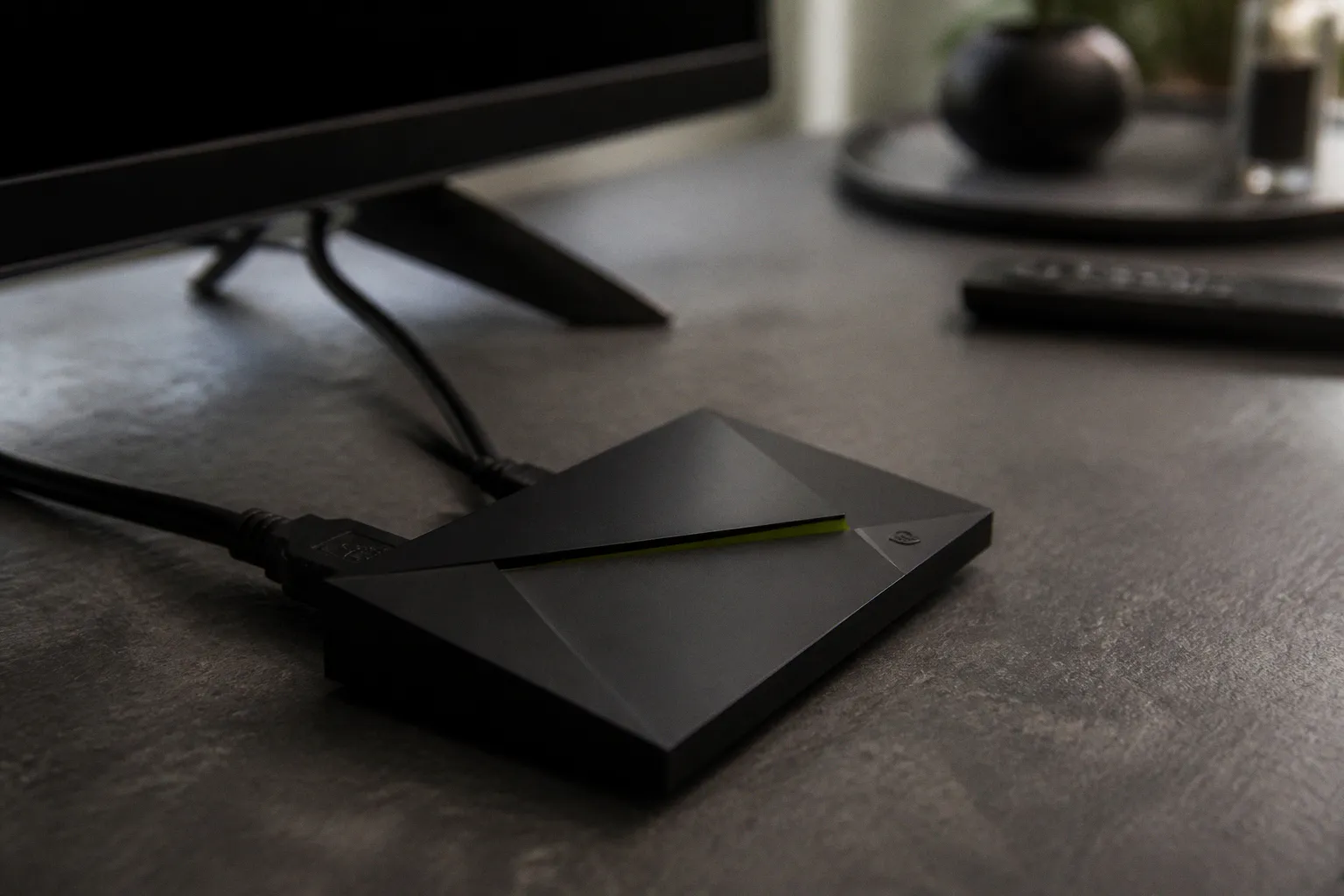
Today's boxes are asked to be Plex servers, cloud-gaming rigs, smart-home hubs, and Dolby Vision broadcasters — sometimes in the same evening. And the three names that keep turning up in 2025 — NVIDIA SHIELD TV Pro, Google TV Streamer (4K), and Xiaomi TV Box S (3rd Gen) — aren't really competing on the same stage. They're three different answers to three different questions about what you actually do with the rectangle behind your TV.
I spent time with all three: testing with my own Plex library, running a 4K HDR Netflix loop, hammering GeForce NOW on the SHIELD, refreshing the home screen enough times to give my remote a workout. Here's the walk-through of which one earns its spot in your cabinet.
Meet the Three Contenders
Before we go deep, an at-a-glance scorecard, because the differences are sharper than the spec sheets let on.
| Parameter | NVIDIA SHIELD TV Pro | Google TV Streamer (4K) | Xiaomi TV Box S (3rd Gen) |
|---|---|---|---|
| Processor / GPU | Tegra X1+ / 256-core | Not officially detailed by Google | Quad-core ARM up to 2.5 GHz / ARM G310 V2 |
| RAM / Storage | 3 GB / 16 GB | 4 GB / 32 GB | 2 GB / 32 GB |
| Max Video Output | 4K HDR at 60 fps | 4K HDR at 60 fps | 4K at 60 fps |
| HDR Formats | Dolby Vision, HDR10 | Dolby Vision, HDR10, HDR10+, HLG | Dolby Vision, HDR10+ |
| Network | Gigabit Ethernet, Wi-Fi, Bluetooth | Gigabit Ethernet, Wi-Fi 802.11ac, Bluetooth 5.1 | Wi-Fi 6, Bluetooth 5.2 |
| Ports | 2× USB 3.0, HDMI, Ethernet | HDMI 2.1, USB-C, Ethernet | HDMI 2.1, USB 2.0 |
| Expandable Storage | Yes (USB + Plex Media Server) | No | No microSD slot |
| Cloud Gaming Focus | GeForce NOW (40 Mbps for 4K/60) | None native | None native |
| Smart-Home Role | Basic | Thread border router / Matter controller | None notable |
| Standout Feature | Local media server + AI upscaling | Smart-home hub, larger RAM/storage | Wi-Fi 6 + tidy budget profile |
NVIDIA SHIELD TV Pro: The Powerhouse for Plex and Cloud Gaming
If you've ever assembled a personal media library and then despaired at finding a streamer that could actually play it back the way it was meant to be played, the SHIELD TV Pro is still the answer. It holds a peculiar position in 2025 — ancient, by gadget standards, but somehow still the most ambitious box on this list.
The reasons are embarrassingly concrete. Two USB 3.0 ports sit on the back, which means you can plug in a hard drive full of rips and turn the SHIELD into a Plex Media Server — not just a Plex client. The Tegra X1+ chip with its 256-core GPU and 3 GB of RAM runs that server without breaking a sweat. AI upscaling is the real magic trick: it takes sub-1080p content and pushes it to 4K at 60 fps using on-device machine learning, and it does so well enough that you stop noticing. For anyone with a messy, multi-format, multi-decade library, this box is the closest thing to a one-device solution.
Cloud gaming through GeForce NOW is the second act, and it's where the SHIELD's networking finally earns its keep. NVIDIA specifies 40 Mbps for 4K at 60 fps on GeForce NOW Ultimate, recommends wired Ethernet or a clean 5 GHz Wi-Fi signal, and asks for under 80 ms of latency to one of its data centers. Clear those bars and the SHIELD behaves like a budget gaming PC that happens to live behind your TV. If you can't, no amount of hardware will rescue the session — the cloud is, finally, a network product.
One quick correction, because I see it repeated endlessly: NVIDIA's own support page states that its proprietary GameStream service ended in February 2023. So if a review or a Reddit thread tells you to "just use GameStream" for your PC library, that lane is closed. Use Moonlight, use Steam Link, use Parsec — but use your own rig, not NVIDIA's dead service.
The honest drawback? The SHIELD TV Pro is no spring chicken. There's been no Tegra X2 refresh, the Wi-Fi is older than what the Google TV Streamer ships, and 3 GB of RAM feels modest in a year when Google doubled up on memory. You're paying for versatility and proven longevity rather than bleeding-edge silicon.
The SHIELD TV Pro is the only box on this list that still treats "watching stuff" as a job for an actual computer.
Google TV Streamer (4K): The Modern Successor for Smart Home Integration
The Google TV Streamer arrived in late summer 2024 — Google announced it on August 6, it hit shelves September 24 at $99.99, framed as the successor to the Chromecast with Google TV. The "spiritual" part of that sentence is doing a lot of work, because the hardware is meaningfully different.
Under the hood you get 4 GB of RAM and 32 GB of storage, which is a generous jump from the Chromecast's slim profile and the place where the Google TV Streamer most clearly out-muscles the SHIELD on paper. The interface feels smoother, app launches are noticeably tighter, and the home screen with its recommendation rails behaves like the Google TV experience Google clearly wanted to ship two years ago but couldn't quite on the older silicon. Wi-Fi is 802.11ac rather than the SHIELD's older wireless, gigabit Ethernet is included, and a USB-C port handles power.
Video-wise, the published ceiling is 4K HDR at 60 fps with Dolby Vision, HDR10, HDR10+, and HLG. That's the broadest HDR-format coverage in this comparison. There is one footgun: Google requires a certified HDMI 2.1 cable for the connection, sold separately. Don't be tempted to assume the HDMI 2.1 port means 4K at 120 fps just because the connector says so — Google's published output stays at 4K at 60 fps. The connector label is not a feature guarantee.
Where this box earns its real estate, in my opinion, is the smart-home bit. The Google TV Streamer doubles as a Thread border router and Matter controller, which means it can quietly run the lights, locks, and thermostats in the background while you scroll for something to watch. If you've built your house around Google Home, this is the streamer that finally feels native to that ecosystem. If you haven't, none of that matters and the box becomes "the one with extra storage." Still good, just less magical.
Xiaomi TV Box S (3rd Gen): Balancing Budget and Wi-Fi 6 Performance
The Xiaomi TV Box S (3rd Gen) is the box for people who want the Google TV experience, full stop, without paying the SHIELD tax or committing to Google's broader smart-home ecosystem. The spec sheet is leaner but surprisingly modern where it counts: quad-core 64-bit CPU up to 2.5 GHz, ARM G310 V2 GPU, 2 GB of RAM, 32 GB of storage, Wi-Fi 6, and Bluetooth 5.2. That Wi-Fi 6 support is a quiet win, especially if your router is also Wi-Fi 6 — cleaner throughput on a crowded network than either of the more expensive boxes can promise.
Video output is 4K at 60 fps with Dolby Vision and HDR10+ support. Dolby Audio and DTS:X are in the spec sheet for audio. The two physical ports to know about are HDMI 2.1 and USB 2.0 — and yes, the USB port is the older, slower standard, which is the place where the budget DNA shows through. Storage is fixed at 32 GB with no microSD slot, so plan your downloads accordingly.
A note on regional availability: Xiaomi's documentation is detailed, but I couldn't pin down a clean current US MSRP or a guarantee that this specific third-gen box is in stock everywhere in the United States at the moment. Where Xiaomi sells directly, the value looks genuinely strong. Buying through importers? Factor in the import math.
Where the Xiaomi shines is the day-to-day streaming routine. Wi-Fi 6 keeps buffering at bay on busy networks, the Google TV UI behaves well, and the format support is more than the spec sheet lets on. Where it doesn't pretend to be something it isn't: gaming, local media servers, or any kind of expansion. There's no Plex Media Server story, no GeForce NOW focus, definitely no room for a hard drive. Treat it like a tidy, fast set-top box and you'll be happy.
Decoding 4K Streaming Requirements: Bandwidth and Hardware Realities
Here is the part that gets every "best streamer" conversation sideways. Marketers love to print "4K" on the box. Netflix's own help center recommends at least 15 Mbps for stable UHD streaming, and that's the smallest billable unit of advice: enough bandwidth for the stream to limp across the finish line, not enough to feel luxurious. For the cloud-gaming crowd, NVIDIA lists 40 Mbps for 4K at 60 fps on GeForce NOW Ultimate on the SHIELD — a different scale entirely.
What does this actually mean for your living room? For Netflix, Disney+, Max, Apple TV+, and Prime Video in 4K HDR, the 15 Mbps floor is real, but it's only the floor. Plan on 25 to 40 Mbps of headroom during prime evening hours, when the household is doing five things at once and the neighborhood's Wi-Fi is congested. For GeForce NOW on SHIELD, 40 Mbps is the line, and you want wired Ethernet or a clean 5 GHz Wi-Fi signal — not Wi-Fi 6E wizardry, just clean throughput. A single drop in latency is the difference between a smooth round and a rage-quit.
The bandwidth lesson: if your internet plan tops out around 25 Mbps, you will get 4K most evenings. You will also get a few bad evenings. Cloud gaming at 4K is genuinely aspirational at that speed.
Navigating the Limits of HDMI 2.1 and Format Compatibility
HDMI 2.1 is the most over-promised spec in home theater, and our three boxes are exhibit A. The Google TV Streamer has an HDMI 2.1 port and requires a certified Ultra High Speed cable. The Xiaomi TV Box S (3rd Gen) lists HDMI 2.1 too. The SHIELD TV Pro predates the 2.1 era on its box connector. And none of them is documented to output 4K at 120 fps. The HDMI 2.1 specification supports formats up to 4K at 120 Hz with 48 Gbps of bandwidth on paper — when used with a certified Ultra High Speed cable — but the published maximum output for the Google TV Streamer and the Xiaomi stays at 4K at 60 fps.
The translation: an HDMI 2.1 label is a cable-and-connector story, not a feature guarantee. Variable Refresh Rate (VRR), Auto Low Latency Mode (ALLM), and 4K at 120 fps are features that have to be individually enabled by the manufacturer, certified by the display, and supported by the app or game pushing content into the box. Don't buy based on the connector. Buy based on the published, per-device output modes.
Format compatibility follows the same logic. The SHIELD TV Pro supports Dolby Vision and HDR10. The Google TV Streamer adds HDR10+ and HLG to that list — the broadest HDR coverage of the three. The Xiaomi TV Box S (3rd Gen) ships with Dolby Vision and HDR10+ plus Dolby Audio and DTS:X. None of that guarantees every streaming app on the box delivers every format. Dolby Vision, HDR10+, Dolby Atmos, and DTS:X availability still depends on the app, the subscription tier, the country, your TV's HDMI handshake, and the soundbar chain behind it. Device-level support is necessary, not sufficient.
The Verdict: Which Box Belongs in Your Cabinet?
Each of these boxes wins a different race. Pick the one whose job matches yours, not the one with the loudest spec sheet.
- Buy the NVIDIA SHIELD TV Pro if you maintain a personal Plex library, want GeForce NOW cloud gaming at up to 4K HDR, need AI upscaling to rescue lower-resolution content, or want USB 3.0 expandability no compact streamer offers. Expect to pay an aging-Wi-Fi tax along with it.
- Buy the Google TV Streamer (4K) if you live inside Google Home, want a smoother home screen than the Chromecast could ever deliver, value HDR10+ alongside Dolby Vision, and don't need a local media server or a cloud-gaming rig. The 4 GB of RAM and Thread/Matter support are the differentiators.
- Buy the Xiaomi TV Box S (3rd Gen) if you want a fast, no-fuss Google TV box with Wi-Fi 6 on a reasonable budget, watch the major streaming apps in 4K HDR, and don't need Plex, GeForce NOW, or any physical expansion. Confirm regional availability and pricing for your market before pulling the trigger.
A box that promises to do everything well almost always does one thing poorly. The SHIELD is the Plex-and-gaming specialist. The Google TV Streamer is the streaming-and-smart-home specialist. The Xiaomi is the budget-and-streaming specialist. Match the job to the device and you won't end up with an expensive rectangle you use only to load Netflix.
If you're curious about the company behind the SHIELD's wild AI upscaling and the data centers powering GeForce NOW — and whether Nvidia's surge changes what it means to be a "stock worth watching" — there's a sharp current breakdown of the chip business and the AI infrastructure boom that ties the silicon inside streaming boxes to the much bigger picture. Useful lens on why the SHIELD's chipset still punches above its weight, even when the spec sheet looks dated.
Three boxes, three jobs, one decision: pick the one whose job matches yours — and stop apologizing for not buying all three.
FAQ
Can I use the NVIDIA SHIELD TV Pro to play my own media files?
Does the Google TV Streamer support 4K at 120 fps?
Is the Xiaomi TV Box S (3rd Gen) suitable for cloud gaming?
What internet speed do I need for 4K streaming?
Can I expand the storage on the Google TV Streamer or Xiaomi TV Box S?
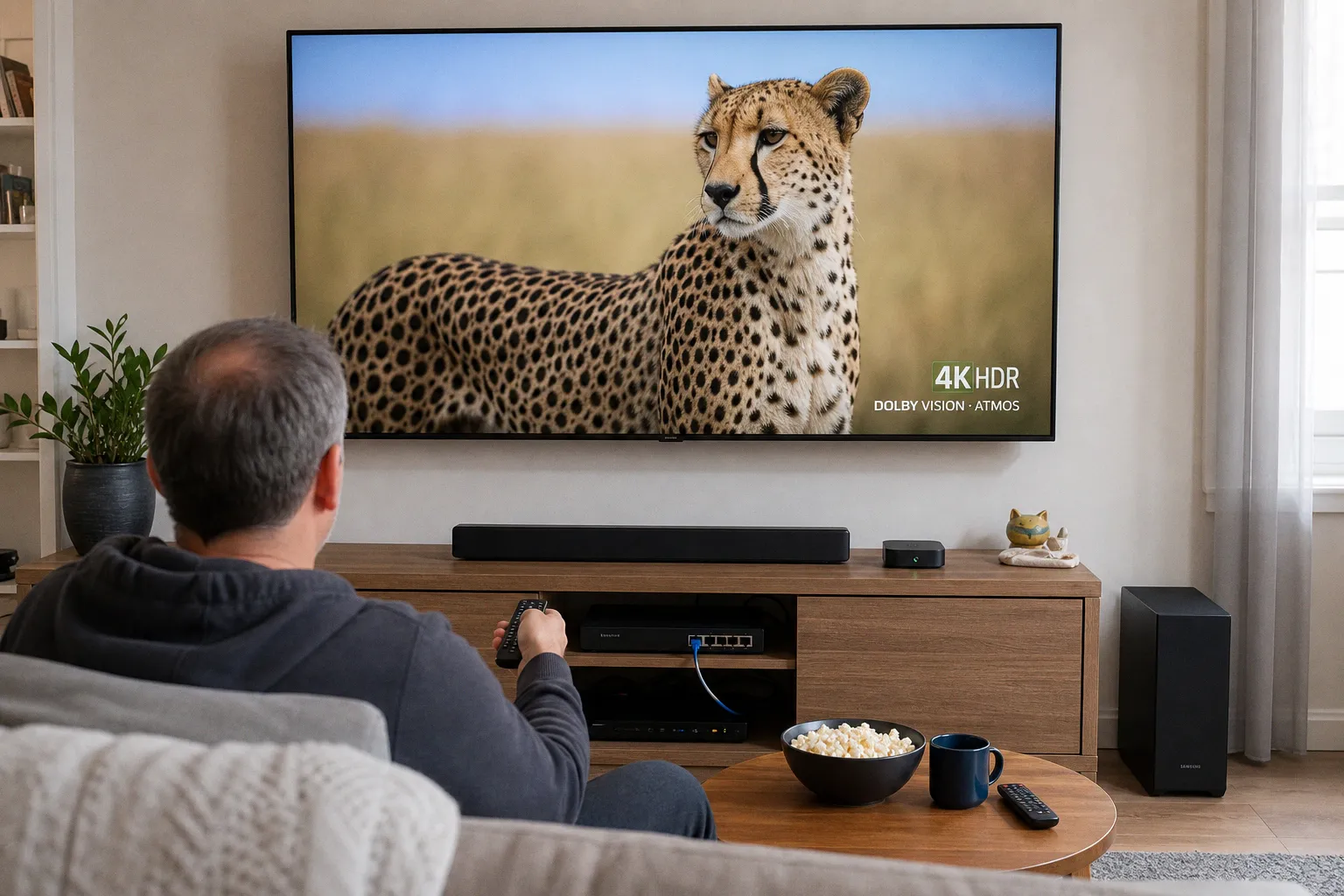 Streaming Devices & Smart TVsSelect a streaming player with Ethernet for 4K HDR
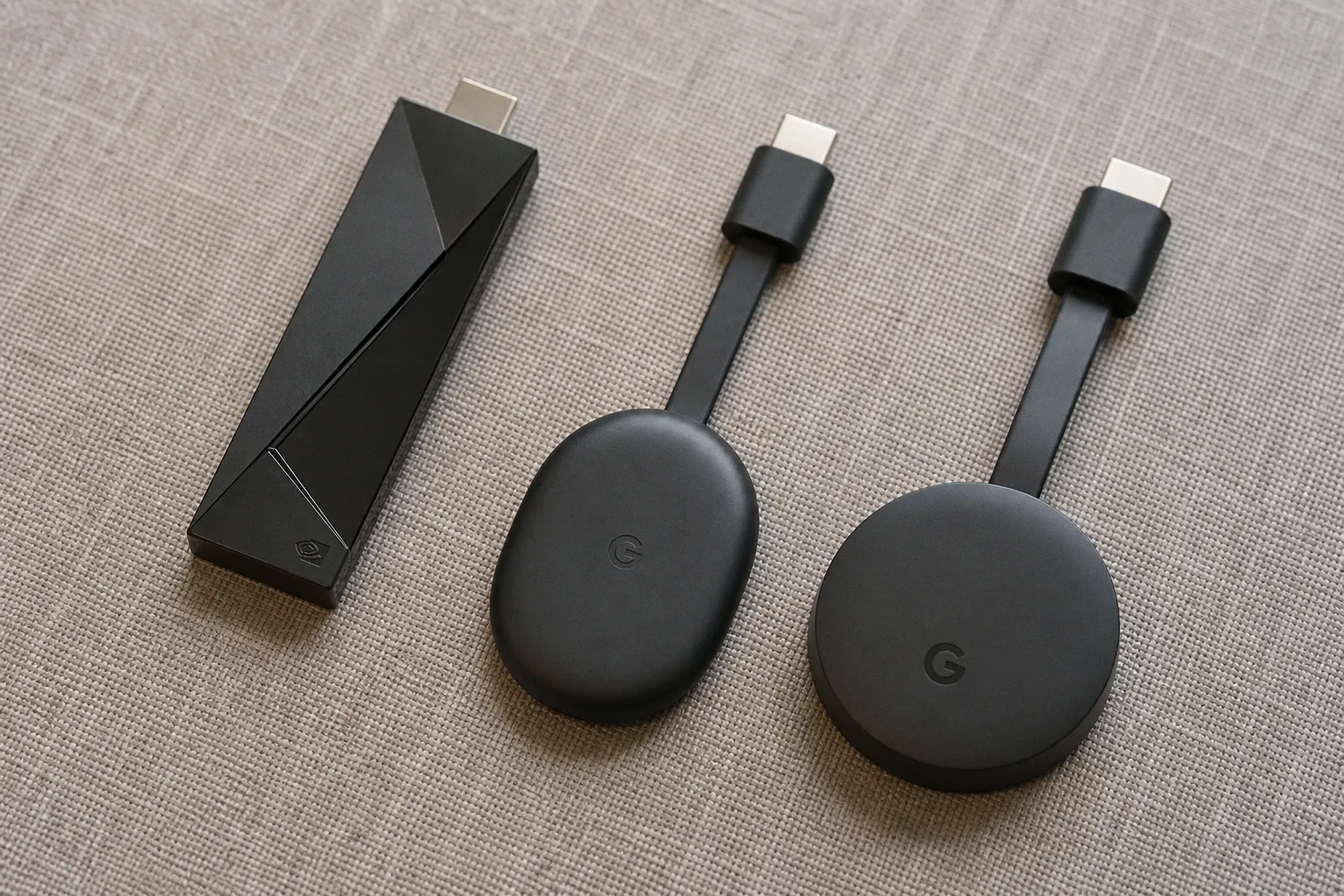 Streaming Devices & Smart TVsGoogle TV streaming device: which model should you buy?
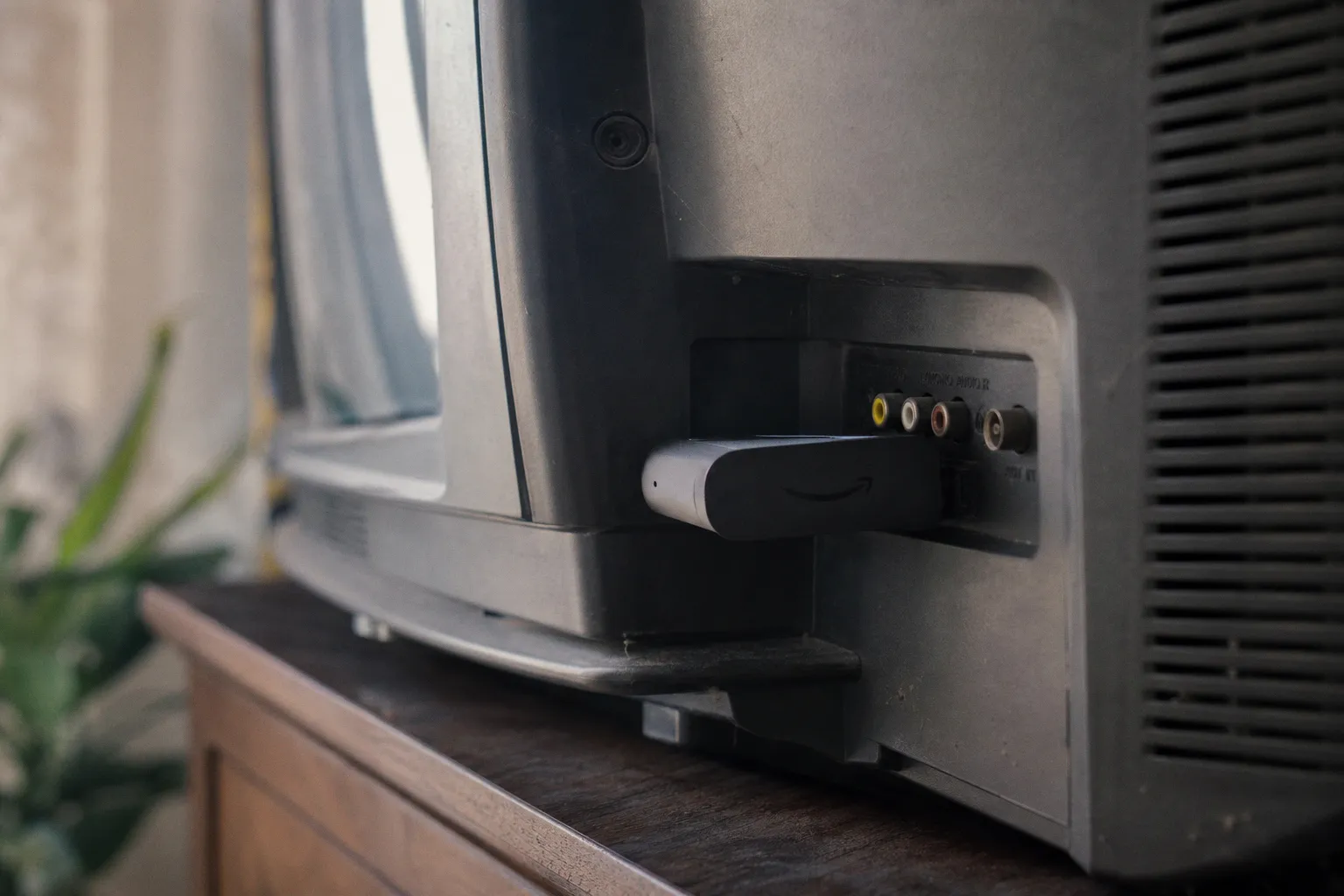 Streaming Devices & Smart TVsPortable streaming devices: are they worth the money?
 Streaming Devices & Smart TVsStreaming device for TV: the best picks by key criteria