ATSC 3.0 tuner solutions for Plex, DVR, and PC setups
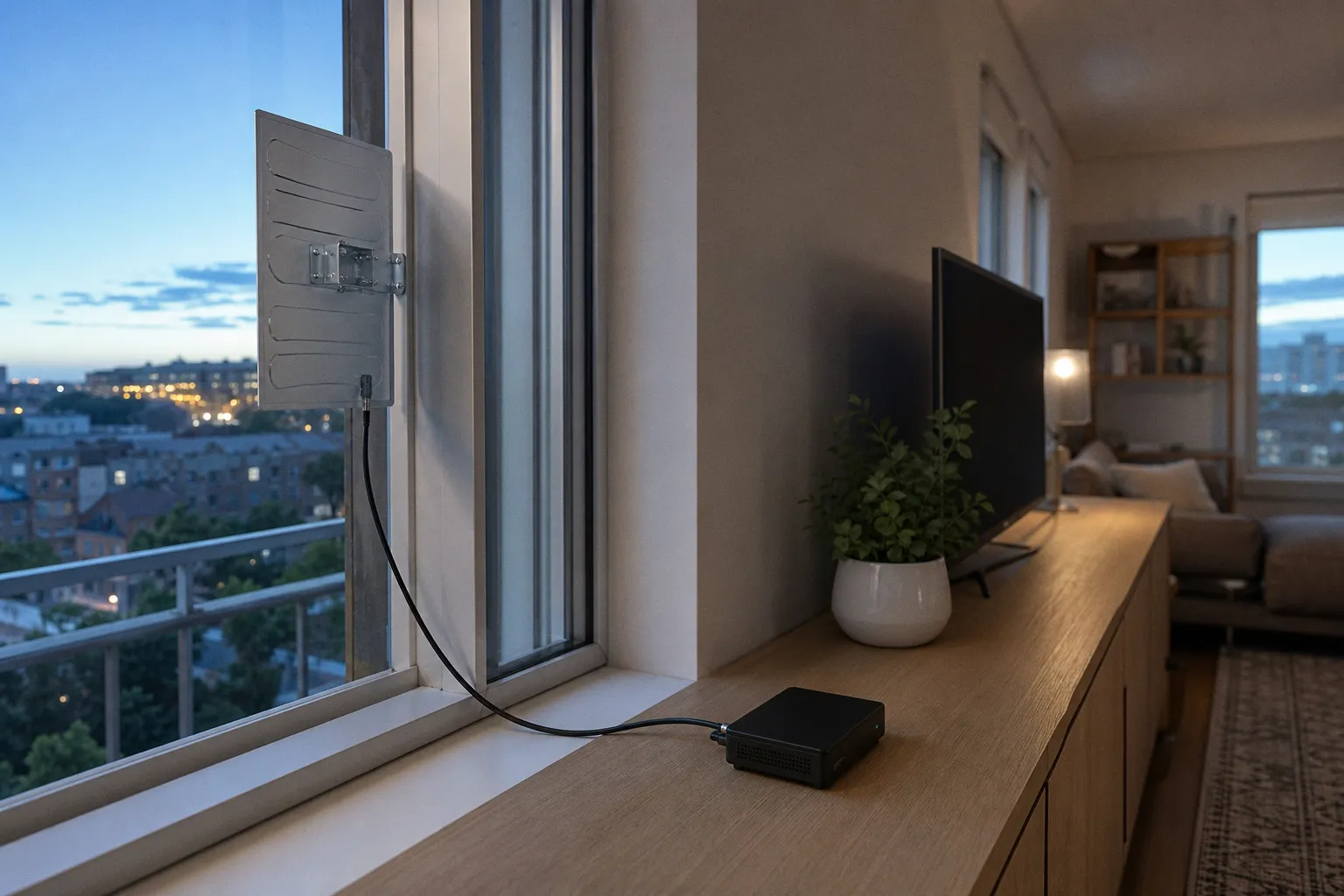
Here's the honest version of the state of play in 2026: the hardware exists, the standard is real, and there is a path to putting atsc 3.0 tuner goodness into your home setup. But whether that path ends inside your beloved Plex library — or in a separate box tucked behind your TV — comes down to one ugly little acronym: DRM. Encryption has quietly turned the NextGen TV rollout into the most counterintuitive cord-cutting story of the year, and if nobody explains it to you in plain English first, you will absolutely spend money on something that does half of what you thought it would.
Let me walk you through what works, what doesn't, and where your weekend is best spent.
The state of the NextGen TV hardware aisle
Here's the thing nobody at the big-box store will tell you: the consumer atsc 3.0 tuner market is tiny. We're not talking fifteen SKUs competing for shelf space the way 4K streaming sticks do. We're talking a handful of devices, most of them network-attached, and almost none of them are the simple USB stick you might be hoping to plug into your PC.
If you're picturing the old days of Hauppauge and AVerTV tuner cards — those beige little rectangles that turned your desktop into a DVR circa 2008 — forget that mental image. ATSC 3.0 uses HEVC (H.265) video compression, which is a heavy lift for the kind of generic silicon that lived in those old sticks. Add in the new AC-4 audio codec, the requirement to decode 4K HDR broadcasts, and the looming specter of encrypted channels, and you've got a piece of hardware that has to be designed specifically for the job.
Which is why the field has shrunk to basically two camps: network-attached tuners (think HDHomeRun, which talks to your devices over your home network) and standalone DVR appliances (think ZapperBox, which records to its own storage and serves content from there). Direct USB tuners for ATSC 3.0 on a PC remain, at best, experimental — and the FCC's voluntary transition framework means nobody's rushing to flood the zone with new SKUs until the broadcast side stabilizes.
The good news? The transition to ATSC 3.0 is voluntary for broadcasters, and the FCC still requires stations to keep an ATSC 1.0 simulcast running for the foreseeable future. So nothing you've already bought is being bricked tomorrow. The bad news? If you specifically want the new standard — the 4K, the better signal, the whole pitch — you're shopping in a small pool. Let me show you what's in it.
Plugging the HDHomeRun FLEX 4K into your Plex setup
If you've spent any time in the home-DVR corners of the internet, you've heard of SiliconDust's HDHomeRun line. It's the de facto standard for over-the-air network tuning on Plex, Channels, Jellyfin, and pretty much every other media-center ecosystem. The current king of the hill is the HDHomeRun FLEX 4K (model HDFX-4K), and it's the only mainstream consumer-grade network tuner on the market that genuinely speaks ATSC 3.0.
What you get under the hood is genuinely impressive for a little box that disappears behind your router: two tuners that handle ATSC 3.0 and 1.0, plus two additional tuners that only handle ATSC 1.0. That four-tuner count isn't a gimmick — it means your household can be recording three things while someone watches a fourth, all without anybody arguing over the antenna. The 3.0-capable pair is what unlocks NextGen TV broadcasts; the 1.0 pair is the safety net for any subchannels or stations that haven't flipped yet, or for any signal your antenna pulls in that the new standard hasn't reached.
Setup is the part that actually feels like 2026. You plug the FLEX 4K into your router with an ethernet cable, scan for channels through SiliconDust's app or web interface, and the device appears on your network as a media source. From there, Plex sees it as a standard tuner — you add it through Plex's Live TV & DVR settings, run a channel scan, and you're in business. You get guide data, scheduled recordings, the whole Plex DVR experience, all streaming to whatever client you point at it.
Here's where the romance hits its first speed bump: this works beautifully for unencrypted ATSC 3.0 broadcasts, and that's a shrinking category.
If you're buying an HDHomeRun FLEX 4K expecting every NextGen TV channel to land in your Plex library, you're going to be deeply disappointed by about three-quarters of them.
The DRM wall: why Plex can see the signal but can't record it
This is the part that genuinely frustrated me when I dug into it, and it's the single most important thing to understand before you spend a dime.
ATSC 3.0 ships with a security layer called the ATSC 3.0 Security Authority, which broadcasters can choose to enable on their signals. When a station flips this on, the broadcast stream is encrypted — and only properly licensed hardware and software can decrypt it. Most major network affiliates have been rolling out A3SA encryption on their NextGen TV signals over the past couple of years, and that rollout has turned a meaningful chunk of the 3.0 channel lineup into something your Plex server simply cannot capture.
Plex supports ATSC 3.0 tuners at the hardware level. It can absolutely see the channels, scan them, and display guide data. The moment it tries to actually record an encrypted broadcast, though, it hits a wall: there's no A3SA decryption layer in the software, and Plex isn't currently on any published roadmap to add one. Channels DVR has a similar story. Jellyfin's support is even more nascent. The PC-based DVR ecosystem — the one that cord-cutters like you and me have spent years building — is, for now, locked out of the encrypted majority of NextGen TV.
The practical result is something like this: with a FLEX 4K in Plex, you might get your local PBS, your local independents, maybe a scrappy CW affiliate if you're lucky. You'll get the full ATSC 1.0 lineup as it always worked. But the big four — ABC, CBS, NBC, Fox — are increasingly off-limits on their NextGen TV simulcasts if those stations have flipped DRM on. You'll still see them on the ATSC 1.0 side, in glorious 720p or 1080i, because the FCC requires that simulcast. You just won't get the shiny 4K HDR version you were promised.
If your heart was set on recording the Super Bowl in full 4K HDR through Plex: I'm sorry. That's not a thing you can do right now. And as long as PC-based DVR software stays on the outside of the A3SA club, it probably won't be next year either.
Standalone DVR options that punch through encryption
So if Plex can't decrypt, what can? This is where the standalone DVR category comes in, and right now the name to know is ZapperBox.
ZapperBox makes two consumer devices — the M1 and the M2 — and both are purpose-built DVRs that support ATSC 3.0 and ship with the licensing and hardware to decrypt A3SA-protected broadcasts. Where Plex is a software play running on your own server, ZapperBox is an appliance: a small box with its own internal storage, its own remote, and its own interface. You plug an antenna into it, plug it into your TV (or your network), and it just… records.
The M1 is the entry-level unit with a single tuner, suitable for a household that doesn't have competing recording demands. The M2 steps up to four tuners — matching the FLEX 4K's count — and is the right pick if your evening plans routinely involve recording three games while someone watches a fourth. Both support external storage expansion, both push recordings to a built-in app and to compatible clients on your network, and both can serve as a guide data and DVR backend for some smart-TV ecosystems.
The trade-off, of course, is that you're now running a second DVR alongside your Plex server. For some of you, that's heresy. For others — particularly anyone whose household has been begging for working 4K NextGen TV recordings since 2023 — it's a perfectly acceptable compromise. ZapperBox handles the encrypted stuff that Plex legally can't, and Plex handles everything else with the polished UI and client app you already love.
Here's how the current lineup stacks up:
| Feature | HDHomeRun FLEX 4K | ZapperBox M1 | ZapperBox M2 |
|---|---|---|---|
| Form factor | Network tuner (no storage) | Standalone DVR appliance | Standalone DVR appliance |
| ATSC 3.0 tuners | 2 (plus 2 ATSC 1.0-only) | 1 | 4 |
| Decrypts A3SA / DRM | No | Yes | Yes |
| Plex compatibility | Yes (unencrypted channels only) | Limited (network playback) | Limited (network playback) |
| Internal recording storage | None (requires Plex/Channels/Jellyfin) | Built-in, expandable | Built-in, expandable |
| Best for | Plex-centric households with mostly unencrypted locals | Single-TV setups wanting full NextGen TV | Multi-recorder households wanting full NextGen TV |
Read that table carefully. There is no single device here that does everything. The dream "one box, every channel, full quality, fully integrated with Plex" device does not exist in 2026, and I'm tired of pretending it does.
What your other gear needs to actually play this stuff
Even if you solve the tuner question, you're not done. ATSC 3.0 broadcasts are encoded in HEVC (H.265) video, which is the same codec used by most 4K streaming services — but it's a much heavier lift for older hardware than the H.264 used by ATSC 1.0. If your Plex clients are running on a decade-old laptop, an early-generation Fire TV, or a first-gen Nvidia Shield, you're going to hit playback stuttering on NextGen TV recordings even when the tuner side works perfectly.
For smooth playback you want clients that have dedicated HEVC hardware decoding. Modern Shields, recent Apple TVs, current-gen Roku devices, and reasonably current smart TVs generally handle it without breaking a sweat. On the PC side, anything built in the last five years with a discrete or modern integrated GPU will transcode or direct-play HEVC without falling over.
Then there's the audio side: ATSC 3.0 broadcasts use AC-4, which is an entirely different beast from the Dolby Digital and AAC you might be used to. Plex's native handling of AC-4 is patchy — playback may work, or you may get silence, depending on the client and the specific broadcast. If immersive audio matters to you, factor in a client ecosystem that has been verified to handle AC-4 properly, or be prepared to lean on transcoding (and a beefy server CPU) to re-encode the audio stream.
One last thing worth flagging: because ATSC 3.0 adoption is voluntary, your local channel lineup depends entirely on what your specific market has deployed. Run a quick check on the FCC's ATSC 3.0 station map or your local broadcasters' websites before you commit to a hardware purchase. There's nothing worse than dropping two hundred bucks on a fancy tuner only to discover your local NBC affiliate hasn't flipped to NextGen TV yet, and you're staring at the same 1080i ATSC 1.0 picture you've had for ten years.
The verdict: what I'd actually buy
If I had to set up a household from scratch today, here's what I'd do, and why.
For a Plex-first household that's mostly happy with ATSC 1.0 quality and just wants to dip a toe into NextGen TV — the HDHomeRun FLEX 4K is still the right call. The four-tuner count, the rock-solid Plex integration, the decade-plus of SiliconDust reliability. You'll get whatever unencrypted 3.0 content your market offers, you'll keep recording everything else in 1.0 the way you always have, and you won't be throwing money at features you can't use.
For anyone whose must-record list includes the major networks in full NextGen TV quality — sorry, there's no Plex-native path for you yet. Layer a ZapperBox M2 onto your setup, point its recordings at the encrypted channels that Plex can't touch, and keep your Plex server handling everything else. It's two boxes instead of one, but it's the only way to actually capture what the broadcast industry spent the last decade hyping.
For a single-TV setup where Plex isn't the center of the universe, the ZapperBox M1 is the cleanest answer. One tuner, one box, full NextGen TV including the encrypted channels, no software wrangling required.
The honest truth about the atsc 3.0 tuner market in 2026 is that it's a market in waiting — waiting for PC-based DVR software to crack A3SA decryption, waiting for more markets to finish their DRM rollouts, waiting for the FCC to clarify the long-term future of the ATSC 1.0 simulcast. The hardware is here, the standard is here, the broadcasts are increasingly here. But the seamless, one-box, record-everything-in-4K dream is still, maddeningly, around the next corner. Buy for the world that exists, not the one the press releases promised, and you'll be a much happier cord-cutter by Sunday night.
FAQ
Can I use Plex to record all NextGen TV channels?
What is the difference between the HDHomeRun FLEX 4K and ZapperBox?
Will my existing ATSC 1.0 equipment stop working?
Why do I need specific hardware for ATSC 3.0 playback?
How do I know if my local area supports NextGen TV?
 Cable & BroadcastingSelect the best satellite TV provider for rural sports
 Cable & BroadcastingATSC 3.0 Tuners: The Best NextGen TV Boxes for Any Budget
 Cord-Cutting & SubscriptionsDowngrade to Hulu with Ads to Save $10 a Month
 Instagram looks to take on streaming services with longer-form, episodic and live formats for its TV app