ATSC 3.0 TV models: which NextGen sets fit your viewing needs?
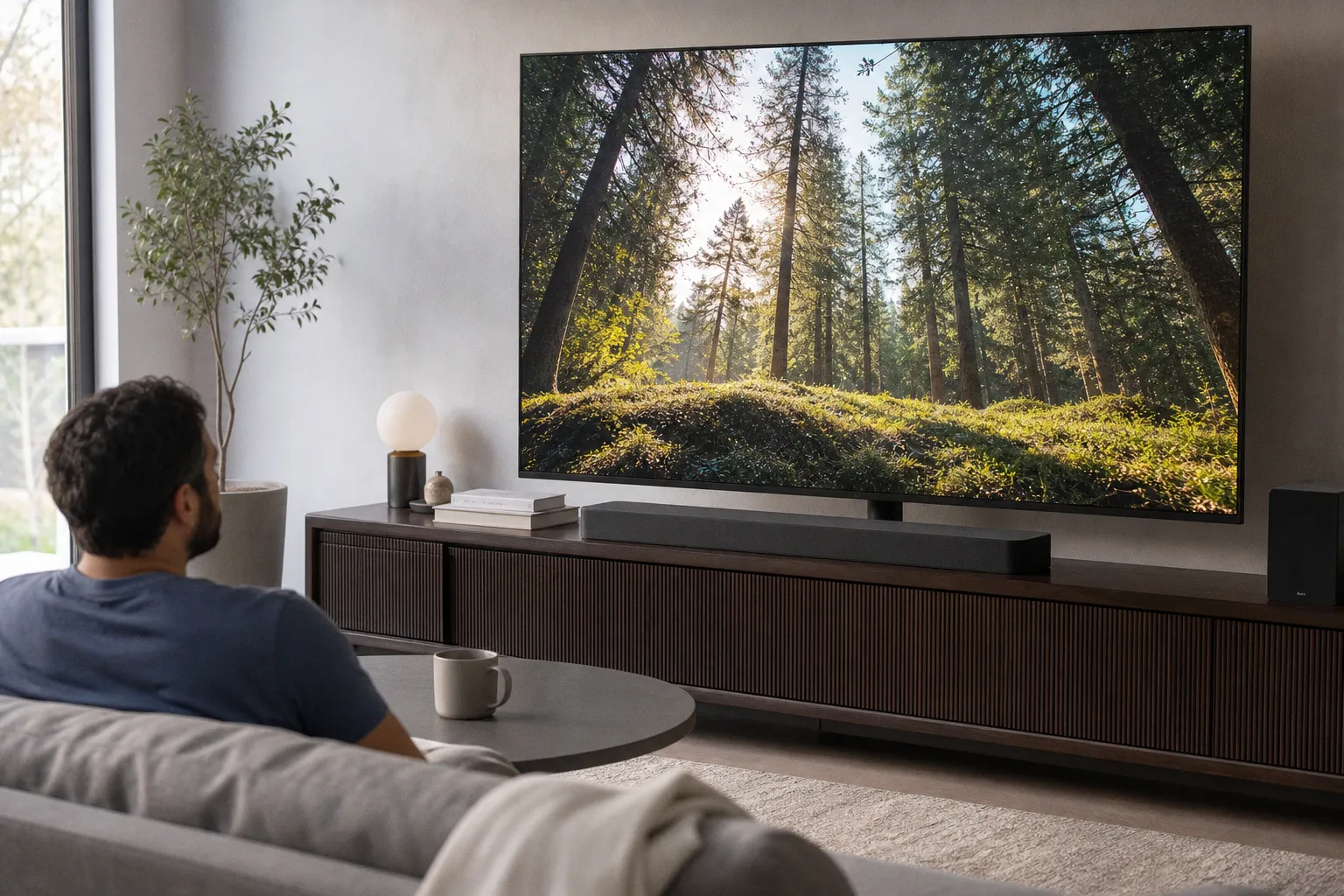
I test TVs with a simple rule: hardware only earns its keep when it solves a problem in your room. An ATSC 3.0 tuner built in can be useful for cord-cutters who rely on local news, NFL Sunday broadcasts, network prime time, and OTA sports. But it does not create a 4K OTA broadcast. It does not replace an antenna. And it does not automatically bypass the growing mess of encrypted local signals.
The current crop of NextGen TV compatible sets is better than it was a few years ago. The catch is that these are mostly premium TVs, large-screen models, or both. If you are shopping strictly for the tuner, you can easily overpay for gaming features, OLED contrast, or an 85-inch panel you never needed.
An ATSC 3.0 tuner is a receiver, not a magic upgrade. The broadcaster, your market, your antenna, and signal encryption still decide what you can watch.
The reality of NextGen TV hardware integration
ATSC 3.0, marketed to consumers as NEXTGEN TV, is the newer U.S. over-the-air broadcast standard. It is voluntary. The FCC authorized the transition in 2017 but did not require TV makers to put ATSC 3.0 tuners in every new television. That matters because a 2025 or 2026 TV with a large “4K” logo may still have only the older ATSC 1.0 tuner.
The standard is also not backward-compatible in the convenient way shoppers assume. Your old TV tuner cannot decode ATSC 3.0 just because a local station starts transmitting it. You need all three pieces:
- A television with an ATSC 3.0 tuner built in, or a genuinely compatible external receiver.
- A properly placed over-the-air antenna. NEXTGEN TV is broadcast radio-frequency television, not an app.
- Local stations that have actually deployed ATSC 3.0 service in your market.
That last point is where the sales pitch gets thin. Broadcasters control their own transition schedules, channel configurations, video resolution, interactive services, and encryption decisions. A tuner can be sitting idle in a very expensive TV if your local market has limited deployment.
ATSC’s current A/300:2026-04 system standard was approved in April 2026, but consumers should not confuse an evolving standard with a finished, uniform viewing experience. This is still a market-by-market rollout. The spec is ahead of the average household experience.
For regular cable subscribers, the tuner has almost no value. Cable and satellite providers use their own delivery systems, channel lineups, and hardware rules. The ATSC 3.0 feature is for antenna users, not a shortcut around a cable package or a carriage dispute.
A tuner does not guarantee 4K sports
The phrase “4K OTA broadcast” gets abused because it sells televisions. ATSC 3.0 can support 4K, better audio formats, improved reception options, and interactive data services. It does not require every station to use them.
A local affiliate can transmit an ATSC 3.0 signal at 1080p, 720p, or another format based on its own technical and business choices. Sony states this plainly in its documentation: broadcast resolution is determined by the broadcaster, not by the TV.
This is particularly relevant for live sports. A Sunday afternoon game may originate in 4K production, be downconverted for a network feed, pass through local affiliate workflows, and arrive at your antenna in something far less glamorous. The broadcast chain has more bottlenecks than the panel spec sheet admits.
I would separate the benefits into two categories.
What an ATSC 3.0 TV can deliver today
- Access to local NEXTGEN TV signals where broadcasters have launched them and your antenna receives them reliably.
- Potential improvements in picture quality or reception efficiency compared with the legacy broadcast system, depending on the station’s implementation.
- A cleaner one-box setup than adding an external tuner to a wall-mounted TV.
- The possibility of enhanced audio, program guides, alerts, and interactive features as local stations enable them.
- A degree of future flexibility for antenna-first viewers who keep a television for several years.
What the tuner cannot promise
- Native 4K local channels.
- Every local affiliate in your area.
- Working interactive features on every station.
- Universal compatibility with encrypted ATSC 3.0 channels.
- Trouble-free support with every external DVR, network tuner, or media server.
- Better Wi-Fi streaming, better HDMI performance, or a better smart-TV interface.
That final point is where people waste money. A weak Google TV implementation will still have UI lag. A poor local-dimming system will still bloom around scorebugs and bright stadium lights. A low-bitrate streaming app will still look soft. The broadcast tuner does not repair the rest of the television.
If live sports are your real priority, assess the TV in this order: panel brightness, motion handling, reflection control, HDMI input count, 120 Hz or 144 Hz gaming capability if you use a console, and only then the ATSC 3.0 line item. The tuner is a feature. It is not the foundation of a good sports TV.
The current ATSC 3.0 TV models worth separating
The current NEXTGEN TV device directory includes newer lines from TCL, Sony, Hisense, and Panasonic, along with older compatible sets and some external accessories. It is a moving directory, not a permanent guarantee of every regional SKU. Always verify the exact model number in the country where you are buying.
Three different buyer profiles stand out in the current market: the high-end OLED buyer, the large-screen value-per-inch buyer, and the gamer who also wants antenna capability.
| Model line | Built-in NEXTGEN TV support | Best fit | Useful hardware details | My read |
|---|---|---|---|---|
| Sony BRAVIA 8 II | Yes on U.S. configuration | Premium movie and broadcast viewer who wants OLED-level picture quality | 65-inch K-65XR80M2 lists one terrestrial/cable tuner; ATSC 3.0 coverage on VHF 2–13 and UHF 14–36 | Buy for picture quality first, tuner second |
| TCL X11K | Yes | Buyers committed to 85- or 98-inch viewing | 4K panel, 144 Hz refresh rate, four HDMI inputs, one eARC port, Wi-Fi 6 | The practical big-screen NextGen option if your room can handle it |
| Panasonic Z95B OLED | Yes in the U.S. | Home-theater users who also game | 144 Hz, AMD FreeSync Premium, NVIDIA G-SYNC Compatible | A performance-first OLED with the right tuner, not a budget OTA solution |
| Hisense U7 / U8 / UX / S7 lines | Listed as compatible in the current directory | Shoppers who want to compare screen sizes and panel tiers | Features vary by exact series, size, and retailer SKU | Verify the exact model, not just the badge on the shelf |
Sony BRAVIA 8 II: the premium-panel choice
The 65-inch Sony BRAVIA 8 II, model K-65XR80M2, is a useful example of how to read a spec sheet correctly. It lists ATSC/ATSC 3.0 NEXTGEN TV support for the United States, with one terrestrial/cable tuner. That means it can be an elegant antenna setup: coaxial cable into the TV, scan channels, and use the built-in interface.
But no serious buyer should select this set solely for over-the-air television. You are paying for the high-end display experience, processing, and overall image quality. The NEXTGEN tuner is the right inclusion on a premium television, but it is not the reason to stretch your budget.
There is also a regional trap. Sony’s specification language ties this capability to a U.S. country or region setting. Do not assume a similarly named model sold in another market has identical tuner hardware. TV model names are not international passports.
TCL X11K: a giant-screen route without a separate box
TCL’s X11K is the straightforward choice for buyers chasing scale. It is sold in 85-inch and 98-inch classes, includes ATSC 3.0, ATSC 1.0, NTSC, and Clear QAM support, and pairs that tuner suite with a 3,840-by-2,160 panel running at 144 Hz.
The ports matter here. Four HDMI inputs and one eARC connection are enough for a typical cord-cutter setup: streaming box, game console, disc player or second console, and an AV receiver or soundbar. Wi-Fi 6 is useful for dense home networks, though I still recommend Ethernet for a stationary TV whenever the wiring is practical.
This is not the “cheap antenna TV” route. It is the “I want an enormous television and do not want another tuner box hanging off it” route. The X11K’s standby draw is listed below 0.5 W, which is fine, but the operating power of a 98-inch television is not where anyone should pretend to be frugal. Size has a power bill.
Panasonic Z95B: for viewers who want OLED and gaming hardware
Panasonic’s U.S. Z95B OLED series brings ATSC 3.0 support into a set aimed squarely at enthusiasts. The 144 Hz capability, AMD FreeSync Premium, and NVIDIA G-SYNC Compatible status make it a more logical fit for someone who splits time between local broadcasts, premium streaming, and gaming.
That blend is valuable because it avoids ecosystem lock-in. You should not have to buy one TV for sports and another monitor for games. Still, do not let the gaming spec overload obscure the OTA question: a flawless OLED panel cannot rescue a weak antenna path or decrypt an inaccessible broadcast.
Pay for the panel you will see every night. Treat the ATSC 3.0 tuner as a bonus only after local signal reality checks out.
The encryption problem is no longer theoretical
This is the ugly section, and it is the one TV marketing avoids.
ATSC 3.0 stations have begun encrypting some broadcasts. In an October 2025 document, the FCC acknowledged that encryption had created access problems for viewers who bought equipment specifically to receive those signals. That is not a minor edge case. It directly changes the value calculation for an ATSC 3.0 TV.
An integrated tuner in a major-brand television is generally the least complicated path because the set is designed to handle its own broadcast stack. But “generally” is doing serious work there. Compatibility can vary by station, market, firmware, authentication requirements, and connected equipment.
External DVRs and network tuners face a harder road. A setup that works brilliantly for legacy ATSC 1.0 recording may not cleanly support encrypted NEXTGEN signals. If your goal is to record local news, network dramas, or every game from an antenna feed, do not purchase a tuner or TV based on the assumption that today’s compatibility will cover every channel tomorrow.
This is also why I do not recommend buying an ATSC 3.0 television as a speculative investment in a future cord-cutting system. The hardware lasts years. Broadcast policies, encryption arrangements, and device support can change much faster.
There is a related production wrinkle. NextGen TV’s pitch includes better-quality broadcast pipelines, but that quality starts long before the transmission tower. If you are curious how creators and small production teams make their first post-production choices, this guide to the easiest video editing software for beginners is a useful reminder that the delivery format is only one link in the chain. Broadcast quality is a workflow problem before it becomes a tuner problem.
Your antenna still does the hard work
A built-in tuner does not eliminate antenna planning. It simply eliminates one external receiver.
I test OTA setups by treating the antenna path as a complete system:
1. Find your transmitter direction and distance. A close urban tower cluster and a distant rural market require different antenna choices. Distance alone is not enough; terrain, building materials, and nearby interference matter.
2. Start with placement, not amplification. A basic indoor antenna near a window can outperform an amplified model shoved behind a TV, metal mount, soundbar, and entertainment cabinet.
3. Use the right antenna band coverage. Sony’s BRAVIA 8 II specifications list VHF channels 2–13 and UHF channels 14–36 for its ATSC 3.0 terrestrial coverage. Your local channel assignments determine whether a UHF-focused antenna is enough.
4. Rescan after installation and after local changes. Channel maps and station deployment can change. A scan performed once during setup is not permanent truth.
5. Keep legacy ATSC 1.0 expectations realistic. Stations are transitioning voluntarily, and the older system remains relevant. Your television needs to handle both formats cleanly, not just wear a NEXTGEN label.
For apartment dwellers, an integrated tuner can be especially convenient because there is less gear to hide and one less remote to manage. But apartments are also where antenna reception gets brutal: foil insulation, concrete, low-E glass, steel framing, and neighboring electronics can ruin the neat theory.
Before buying a premium ATSC 3.0 TV, test OTA reception with an inexpensive antenna and any existing TV or tuner you have. Learn whether you can reliably receive local broadcast signals first. That $30 experiment can prevent a much larger bad purchase.
How I would choose between these sets
The correct choice is not “the best ATSC 3.0 TV.” That category is too broad to be useful. Here is the actual buying logic.
Choose a Sony BRAVIA 8 II if you already want a high-end 65-inch television for movies, streaming, and polished picture processing, and you want an integrated NEXTGEN tuner without compromising the rest of the set. Skip it if OTA is your only reason for upgrading.
Choose a TCL X11K if you want an 85-inch or 98-inch screen, need solid connection flexibility, and want antenna reception built into a giant living-room display. Skip it if your seating distance makes an enormous screen unnecessary. Bigger is not automatically better; it is often just bigger.
Choose a Panasonic Z95B if premium OLED viewing and serious gaming are already on your list. The ATSC 3.0 tuner makes the package more complete. It should not be the deciding feature.
Look carefully at compatible Hisense lines if you are comparing panel technologies and price tiers, but confirm the precise model number and market before you click Buy. Retailer listings are often sloppy, and one letter in a TV SKU can mean a different tuner configuration.
For a budget-minded cord-cutter, my answer is more blunt: do not make ATSC 3.0 the reason you replace a perfectly good ATSC 1.0 TV. Use your existing set, an antenna, and a cheap streaming device while your local NEXTGEN market matures. Put the saved money toward reliable broadband, a better antenna installation, or the streaming services that actually carry the sports and channels you watch.
Buy or skip?
Buy an ATSC 3.0 TV if you are already shopping for a new premium or large-screen set, use an antenna regularly, and have verified that your local stations offer useful NEXTGEN service. The built-in hardware reduces clutter and gives you an option that many cheaper sets still omit.
Skip the upgrade if you expect automatic 4K local sports, universal DVR support, or a cure for weak reception. Those promises are marketing math, not living-room reality.
My verdict: buy the television for its panel, brightness, motion handling, ports, and usable interface. Buy the ATSC 3.0 tuner only as a properly priced extra. That is the only way the NEXTGEN badge earns its space on the box.
FAQ
Does an ATSC 3.0 TV guarantee 4K local broadcasts?
Can I use an ATSC 3.0 tuner to watch cable or satellite TV?
Do I need a new antenna for an ATSC 3.0 television?
Why should I check the specific model number before buying a NextGen TV?
Does an integrated ATSC 3.0 tuner work with all DVRs?
 Cable & BroadcastingSelect the best satellite TV provider for rural sports
 Cable & BroadcastingATSC 3.0 Tuners: The Best NextGen TV Boxes for Any Budget
 Cable & BroadcastingATSC 3.0 tuner solutions for Plex, DVR, and PC setups
 Cable & BroadcastingBest cable TV alternatives: our methodology and test findings