New TV series streaming: our test of platform video bitrates

That matters because new TV series streaming has become the place where platforms display their technical priorities most visibly. Prestige dramas, franchise releases, animation premieres, and high-budget genre shows are marketed in Dolby Vision, HDR10+, Dolby Atmos, and “cinematic” language. Yet the viewer’s actual image is governed by a less marketable layer: bitrate, codec, device trust, regional licensing, and the compression decisions made before the file ever reaches the living-room screen.
The 4K hierarchy is wider than the apps admit
Streaming services tend to describe quality in broad consumer labels: HD, 4K, UHD, HDR, Dolby Vision. Those labels are useful, but incomplete. A 4K stream at 12 Mbps and a 4K stream at 35 Mbps are not the same product, even if both trigger the same badge on a TV interface.
In recent benchmarks and platform disclosures, the spread among major services is large enough to affect ordinary viewing, especially with new series that rely on dark grading, fast action, artificial film grain, or dense visual effects. Apple TV+ remains one of the strongest mainstream services on bitrate, with 4K titles commonly averaging between 25 and 40 Mbps and peaks around 40 Mbps for 4K Dolby Vision series. Sony Pictures Core, available on compatible Bravia TVs and previously branded Bravia Core, sits in a different category: its Pure Stream delivery can reach adaptive bitrates up to 80 Mbps, close to the territory occupied by physical 4K Blu-ray discs, which typically average around 50 to 70 Mbps.
Netflix and Hulu occupy a more bandwidth-conservative middle lane. A September 2025 packet-capture benchmark using identical 4K source material placed Netflix Standard at a 12.5 Mbps average for 4K, peaking around 15 Mbps, while Hulu Standard averaged 13.2 Mbps and peaked around 16 Mbps. Those numbers do not automatically mean a poor image. Modern encoders are far better than the crude early-era streaming math of “more bits equals better video.” But they do mean there is less room for error when the image becomes difficult.
| Platform or tier | Reported 4K bitrate behavior | What it means for new TV series |
|---|---|---|
| Sony Pictures Core with Pure Stream | Up to 80 Mbps adaptive bitrate | The closest streaming gets to disc-like delivery, limited by compatible Bravia hardware and catalog scope |
| Apple TV+ | Roughly 25–40 Mbps average for 4K, with Dolby Vision peaks around 40 Mbps | Consistently strong for prestige series, dark scenes, grain, and high-motion sequences |
| Hulu Standard | Around 13.2 Mbps average, 16 Mbps peak in a September 2025 benchmark | Efficient but less generous; visible compression is more likely in demanding scenes |
| Netflix Standard | Around 12.5 Mbps average, 15 Mbps peak in the same benchmark | Heavily dependent on codec efficiency, title-level encoding, and device path |
| Prime Video base tier after April 10, 2026 | Restricted to HD quality in the US | No longer a 4K destination unless the Ultra add-on is active |
| Prime Video Ultra | $4.99/month add-on for 4K/UHD and Dolby Atmos | Turns technical quality into a discrete upsell rather than a default Prime benefit |
The useful conclusion is not that every viewer should chase the largest number. It is that “where to stream new TV shows” now has two separate answers: where the series is licensed, and where that series is delivered with the least compromised picture. Those answers are increasingly different.
The 4K badge has become a starting label, not a quality guarantee.
Apple TV+ and Sony show what high-bitrate streaming buys
Apple TV+ has an unusually simple advantage in this market: a controlled, premium-positioned content library and a habit of treating video delivery as part of the product rather than as an afterthought. Its best 4K presentations do not just look sharper in static comparison frames. They tend to hold together in the parts of a show where streaming usually collapses: low-light interiors, smoke, rain, firelight, skin texture, camera noise, and wide shots with complex backgrounds.
This is particularly relevant for new series releases because modern TV production has moved heavily into visual styles that punish compression. Expensive science-fiction and fantasy shows often combine synthetic environments, dark color palettes, and fast visual transitions. Crime dramas and prestige thrillers lean on dim interiors and subdued contrast. Even reality and documentary releases can stress an encoder with handheld motion, concert lighting, or natural texture.
Sony Pictures Core’s Pure Stream is the more extreme case, but also the more conditional one. Up to 80 Mbps is a meaningful figure because it moves streaming closer to the bandwidth envelope of 4K Blu-ray. The constraint is not whether the technology is impressive; it is whether the viewer is inside Sony’s supported hardware and catalog ecosystem. That makes it less of a universal answer for the best platforms for new shows and more of a specialized benchmark for what premium streaming delivery can look like when the platform controls the device relationship tightly.
Apple’s broader relevance is that it competes in the mainstream subscription market while still preserving high average bitrates. For a viewer deciding whether to watch a new flagship series on release night, Apple TV+ is one of the few services where the technical delivery usually aligns with the marketing language attached to the show.
There is an industry reason for that. Apple TV+ is not supporting the same sprawl of catalog obligations as Netflix, nor the same hybrid bundle economics as Prime Video, nor the same broad entertainment-library burden as Hulu or Disney+. A smaller library can be encoded, checked, and distributed with a different cost structure. Apple is also using premium picture quality as brand reinforcement: its service is not sold primarily as a volume engine, but as an extension of a high-end hardware and services environment.
Netflix’s efficiency strategy is not the same as Apple’s bitrate strategy
Netflix is frequently judged by bitrate alone, and that produces an incomplete reading. Its reported 12.5 Mbps average for 4K in the September 2025 benchmark is materially lower than Apple TV+’s 25–40 Mbps range. But Netflix has also invested deeply in codec efficiency, per-title encoding, and playback optimization across a vast range of devices and network conditions.
The key development is AV1. By December 2025, AV1 powered 30% of Netflix streaming, and Netflix had launched AV1-based HDR streaming in March 2025 using HDR10+ dynamic metadata and Film Grain Synthesis. The business logic is direct: if Netflix can deliver comparable perceptual quality at lower bitrates, it can reduce bandwidth costs while maintaining acceptable image quality across a global subscriber base. AV1 is not merely a codec upgrade; it is a distribution strategy.
Film Grain Synthesis is a good example of the trade. Grain is expensive to encode because it changes from frame to frame and can look like random noise to a compression system. Instead of spending large amounts of bandwidth preserving the original grain pattern, a service can transmit parameters and reconstruct a grain-like texture during playback. When done well, the image keeps the intended texture with fewer bits. When done poorly, it can look waxy, noisy, or unstable.
For new tv series video bitrate test results, this distinction is crucial. A lower-bitrate AV1 stream may outperform an older-codec stream at a similar or even higher bitrate. But a lower-bitrate stream still has limits. The most difficult scenes—rapid movement through fog, confetti, heavy rain, fire, neon-lit darkness, or noisy handheld footage—remain the places where viewers may see macroblocking, smearing, banding, or loss of fine texture.
Netflix’s recommended internet speed for 4K has long sat in the 15–25 Mbps range, which is practical for broadband households and efficient for scale. That recommendation should not be confused with the bitrate of every delivered stream. It is a household-level access guideline, not a promise that a given title will constantly receive the full ceiling of the connection.
The viewer impact is straightforward. Netflix often looks better than its raw bitrate number implies, particularly on devices with strong AV1 support and stable network throughput. But when placed beside high-bitrate Apple TV+ originals on a large OLED or mini-LED television, especially in dark HDR material, the difference can become visible.
Amazon’s Ultra tier turns 4K into a carriage-style negotiation with the viewer
Prime Video’s 2026 tiering move is one of the clearest examples of streaming adopting the logic of traditional pay TV. In the cable era, a carriage dispute determined whether a channel was available in a package and at what cost. In the streaming era, the dispute is less often between distributors and channel owners and more often between platform economics and the viewer’s tolerance for add-ons.
By moving 4K/UHD streaming and Dolby Atmos into Prime Video Ultra for $4.99 per month, Amazon effectively separated access from fidelity. A Prime subscriber may still have access to Prime Video programming, but not to the highest technical version of that programming unless the add-on is active. That distinction is particularly important for new high-budget series, where the difference between HD SDR-style delivery and 4K HDR with immersive audio is not cosmetic. It changes the product.
This is also a rational business move, even if it is a worse default outcome for the viewer. 4K delivery costs more than HD delivery. Dolby Atmos adds complexity. High-profile releases drive expensive peak demand. Advertising-supported tiers pressure platforms to manage cost per viewing hour aggressively. A paid quality tier lets Amazon extract revenue from the subset of subscribers most likely to notice and pay for the difference: home-theater owners, early adopters, and viewers using large 4K screens.
The larger market implication is that other platforms will be watching the churn data closely. If Amazon can restrict base quality without meaningful cancellation pressure, streaming quality becomes an easier place to segment. If viewers resist, 4K may remain a standard expectation on premium services. The industry has already normalized ad-supported tiers; the next segmentation layer is technical capability.
For households comparing streaming quality for new releases, Prime Video now requires an extra step in the mental math. The question is no longer “Is this series on Prime?” but “Is this series on Prime in the quality tier that matches the television and sound system in the room?”
The new price of clarity is not always a new subscription. Sometimes it is an add-on inside the subscription already being paid.
Disney+ shows why regional codec policy can break consistency
Disney+ presents a different kind of quality problem: not just average bitrate, but regional technical variability. In June 2026, Disney+ changed its HEVC codec usage in certain European markets following a patent dispute with InterDigital. Reports indicated that HDR10 was briefly removed before being restored. The important part is not that Disney+ permanently lost HDR10 globally—it did not. The important part is that codec disputes can alter the viewer experience by market, device, and time period.
This is an under-discussed issue in new TV series streaming because release marketing is global while delivery infrastructure is not. A new Marvel, Star Wars, Pixar, or FX-branded release can be promoted with uniform creative assets, yet the actual stream may travel through different codec policies, rights constraints, device capabilities, and regional legal pressures.
Codec licensing is not a viewer-facing feature, but it affects viewers directly. HEVC, AV1, HDR10, HDR10+, and Dolby Vision are not simply acronyms on a spec sheet; they are part of the cost structure behind streaming. If a patent dispute makes one delivery path less attractive or temporarily unavailable in a region, the service may alter the technical presentation while preserving the same app interface and title page.
That is why regional anecdotes about picture quality should be treated carefully. A viewer in one European market may see a temporary HDR behavior that a viewer in the US never encounters. A device using one codec path may look different from another device on the same account. And an animated show with clean lines and controlled color fields may react differently to compression than a dark live-action series with film grain and smoke.
The unknowns matter here. Exact average bitrate changes for some Disney+ animated titles after mid-2026 reports of reductions have not been established in the available data. It would be unsound to treat those reports as a universal platform measurement. What can be said with confidence is narrower and more useful: Disney+ has demonstrated that codec and patent conditions can affect regional streaming quality, even when the subscription name and title branding remain unchanged.
Hardware and DRM still influence the stream behind the stream
The streaming app is only one piece of the delivery chain. The device matters. The operating system matters. The codec support in the chip matters. The DRM path matters. The HDMI chain, display mode, and audio capability matter. In many homes, the weakest link is not the broadband line but the device being used to request and decode the stream.
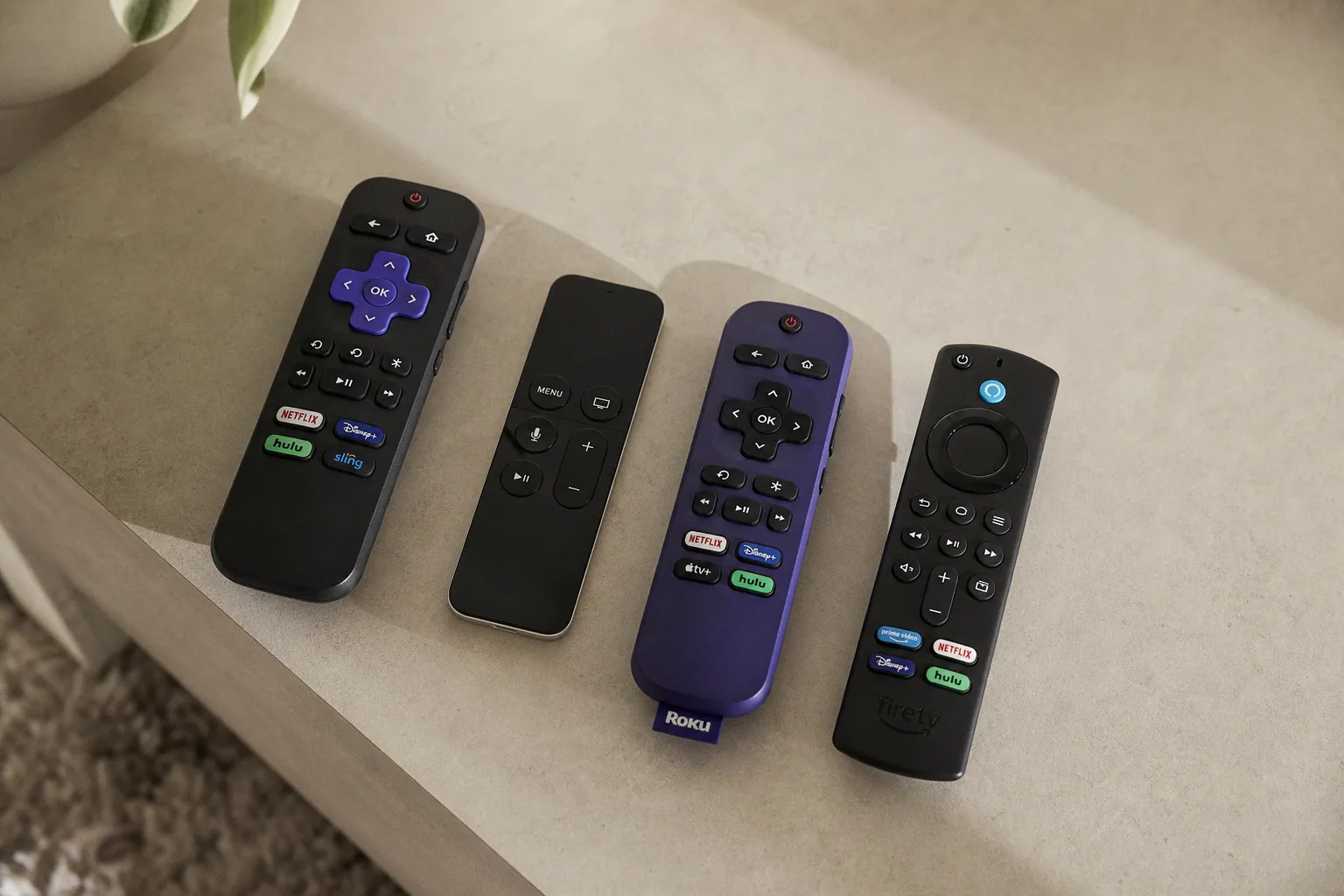
A modern Apple TV 4K, a current high-end smart TV app, a PlayStation, a Roku, a Fire TV device, and an older Android TV box may not receive identical streams from every service. Sometimes the difference is codec support: one device may support AV1 hardware decoding while another falls back to HEVC or AVC. Sometimes the difference is HDR format support: Dolby Vision on one path, HDR10 or SDR on another. Sometimes the issue is DRM trust level, where a platform may reserve higher-quality streams for device classes it treats as more secure.
The available research does not establish a universal rule that devices such as Nvidia Shield Pro or Roku receive lower bitrates than Apple TV hardware because of Widevine versus FairPlay DRM trust levels. That claim is too broad. But device-level variance is real enough that viewers testing quality should avoid drawing conclusions from a single streaming stick or one built-in TV app.
For practical comparison, the cleanest method is controlled viewing:
1. Use the same episode, ideally a new release with a known 4K HDR presentation, and compare it across devices on the same display.
2. Watch scenes that stress compression: dark gradients, fast camera movement, rain, smoke, grain, or wide landscape shots.
3. Confirm that the app is actually outputting 4K HDR or Dolby Vision rather than merely showing a title-page badge.
4. Keep the network path stable, preferably wired Ethernet or strong Wi-Fi with no competing household downloads.
5. Check the subscription tier, because Amazon’s post-April 2026 structure proves that access to the title and access to the UHD stream can now be separate.
This is where the service-rating instinct has to be disciplined. A platform cannot be judged only by its best demo title, and a device cannot be judged only by its interface speed. The relevant question is whether the platform-device combination reliably delivers the advertised version of new shows under normal household conditions.
AI preprocessing is compressing the future before it reaches the encoder
The next visible shift may not come from a new subscription tier or a new HDR badge. It may come from preprocessing systems that prepare video before standard encoding begins. AI-powered tools such as SimaBit have shown bandwidth savings in the 22% to 35% range while maintaining or improving perceptual quality scores such as VMAF.
That number should be read carefully. A 22% bandwidth reduction does not automatically mean viewers receive a worse image. If preprocessing removes redundancies, stabilizes difficult visual patterns, or improves encode efficiency without damaging perceptual detail, the viewer may see the same or better quality at a lower delivered bitrate. Platforms have strong incentives to pursue this because bandwidth is one of the few costs that scales directly with viewing hours.
But there is a risk. Perceptual metrics are useful, not absolute. A model can optimize for the parts of an image most likely to influence a score while mishandling subjective details that matter to viewers: grain character, facial texture, animation line integrity, or subtle shadow transitions. New TV series are especially exposed because they are increasingly mastered with distinctive visual signatures. Compression that flatters one genre can harm another.
This is the same tension that defines the current market. Apple TV+ leans into generous bitrate. Netflix leans into encoding sophistication at global scale. Sony Pictures Core demonstrates a high-bandwidth premium path inside a hardware ecosystem. Amazon is monetizing UHD and Atmos access directly. Disney+ illustrates how codec policy and regional disputes can interrupt consistency. AI preprocessing will not erase those differences; it will make them harder to see from the outside.
The verdict: the best platform depends on whether quality is part of the product
For viewers who care most about the picture quality of new TV series releases, Apple TV+ is the most consistently persuasive mainstream subscription service in the current bitrate landscape. Its 25–40 Mbps 4K range gives difficult material more room, and that headroom shows up on larger screens. Sony Pictures Core can exceed it technically with Pure Stream up to 80 Mbps, but its hardware and catalog constraints make it a premium specialist rather than a general answer for new-series viewing.
Netflix remains the most interesting engineering case. Its 12.5 Mbps average in the cited 4K benchmark looks modest beside Apple, yet AV1 deployment, HDR10+ work, and Film Grain Synthesis make its delivery more capable than the number alone suggests. Hulu sits in a similar mid-bitrate range, though without the same public technical narrative around AV1 scale. Prime Video now requires the clearest warning label: after April 10, 2026, the base tier should not be treated as a 4K service in the US. Viewers who want UHD and Dolby Atmos need the Ultra add-on.
The daily habit change is simple. Choosing where to stream new TV shows can no longer stop at the content library. The platform’s bitrate policy, codec strategy, subscription tier, device path, and regional delivery rules now shape the show as surely as the release date or trailer. For casual viewing on a smaller screen, the differences may fade into the background. On a large 4K HDR television, with a new prestige series built around dark grading and expensive visual effects, they become part of the experience itself.