The 5 Best TVs For Watching Movies of 2026
Testing season is in full swing, and with it comes a fresh round of head-to-head display rankings from outlets like RTINGS.com and PCMag UK.
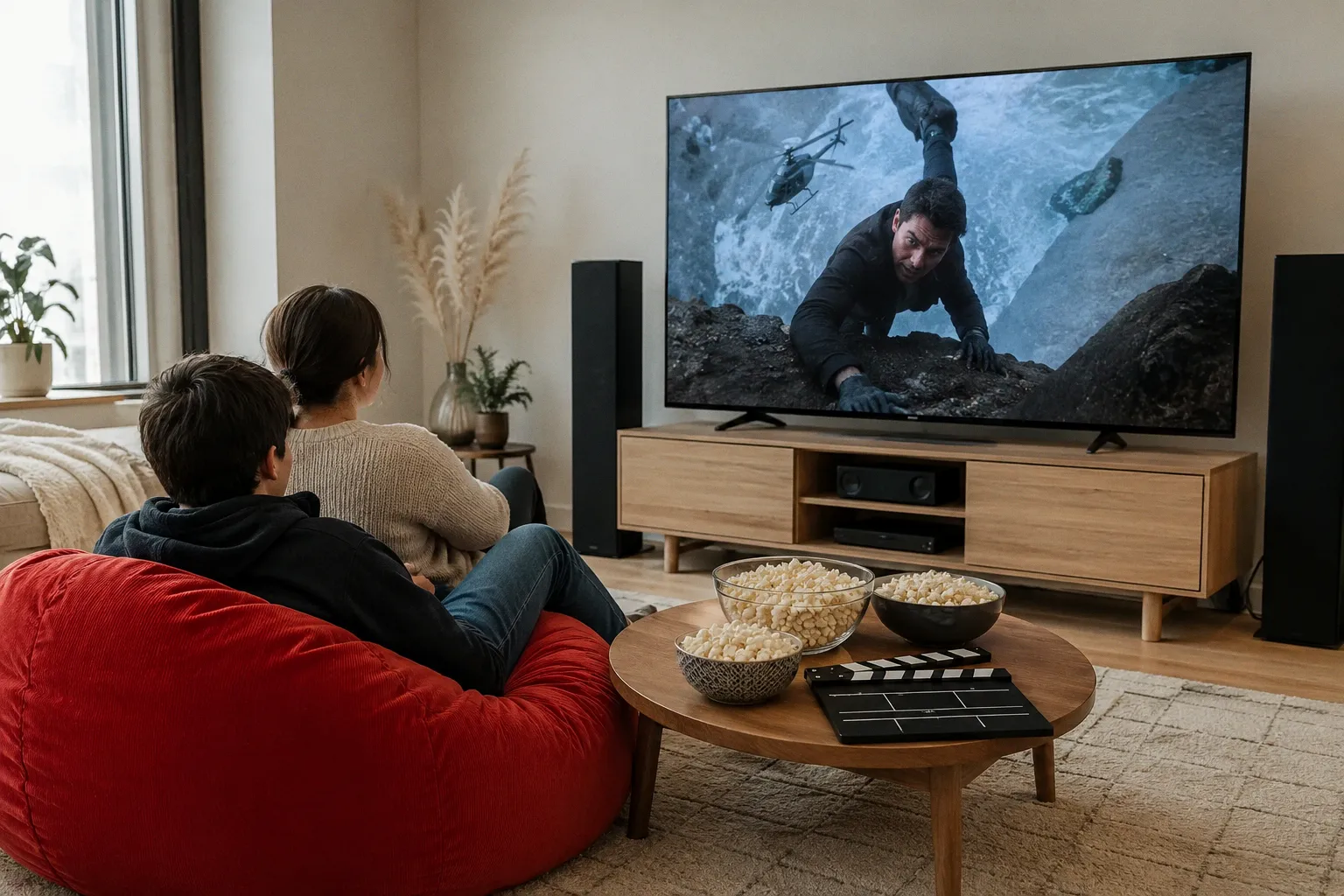
The OLED Benchmark Keeps Moving
Samsung's S95H has emerged as a standout in this year's assessments, earning recognition for both its picture quality and responsiveness. According to PCMag UK's hands-on evaluation, the set delivers the lowest measured input lag in its class alongside a 165Hz native refresh rate with full variable refresh rate support—specs that matter for gamers but also signal processing headroom that benefits film playback.
What's drawing attention on the cinema side is the built-in 4.2.2-channel spatial audio system. For viewers who rely on streaming libraries rather than physical media, integrated audio of this caliber reduces the friction of assembling a home theater stack. Samsung's Q-Symphony feature, which merges compatible soundbars with the TV's own speakers into a unified setup, further tightens that integration. The business logic is clear: the fewer peripherals a viewer needs, the lower the barrier to premium consumption.
Mini-LED Pushes Brightness Into New Territory
TCL's QM8L SQD-Mini LED is making the case that peak luminance is no longer an OLED-exclusive advantage. The model earned a lab award for brightness under 100 inches, outshining its predecessor in two out of three measured luminance metrics. For streamers watching in ambient-lit rooms—kitchens, open-plan living spaces—raw nits translate directly to usable picture quality without blackout curtains.
The QM8L also covers a color range that rivals far more expensive RGB LED panels, according to testing data. That performance envelope means HDR content from major platforms can render closer to mastering intent without the premium price tag typically associated with wide-gamut displays. For viewers calibrating their setup around catalog depth—how many services, how many formats—it's a compelling proposition.
The Budget Segment Gets Serious
Perhaps the most consequential shift for the average cord-cutter is happening at the lower end. Hisense's U65QF is being cited as the brightest TV in its price class, with the 65-inch variant frequently available around $600 and the 85-inch model at roughly $1,100. Those figures undercut many higher-end 65-inch displays by a significant margin.
There are trade-offs: the U65QF runs Amazon's Fire TV platform rather than Google TV, which means no hands-free voice control or native Google Cast. For households already embedded in the Alexa ecosystem, that's a non-issue. For others, it's a calibration decision worth weighing against the cost savings.
The broader takeaway for the streaming-first viewer is straightforward: the hardware floor has risen. Whether you're chasing reference-grade OLED color or maximizing screen real estate on a constrained budget, the 2026 lineup narrows the gap between what's theoretically possible and what's practically accessible. The watchlist may be infinite—your display choices no longer have to be.
The story continues
 ITV Selects MainStreaming To Support ITVX Delivery Strategy - UK Broadcast News | 30/06/2026
 Ads on Disney+, Netflix, & More Are About to Get Quieter After a New California Law Takes Effect This Week
 Roku Adds 7 New Live Channels to Roku TVs & Roku Players
 Instagram looks to take on streaming services with longer-form, episodic and live formats for its TV app